

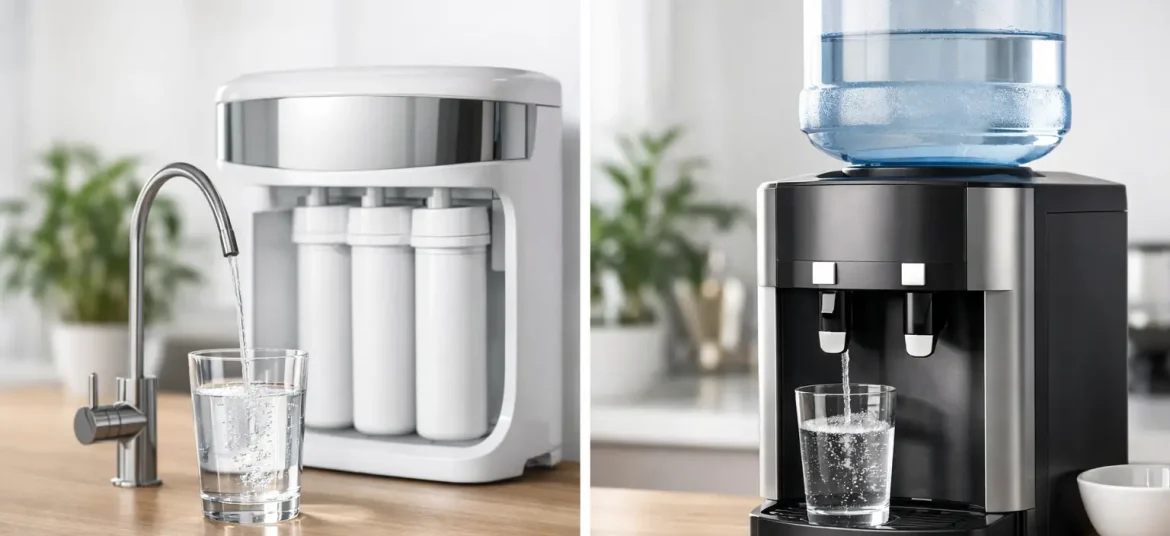
If your kitchen worktop already feels busy, adding another water appliance needs to make sense. That is why the question of water purifier vs dispenser matters – they may look similar in photos, but they solve different problems in daily life.
For most households, the choice comes down to one core need. Are you trying to improve water quality, or are you mainly trying to make drinking water easier to access at the temperature you prefer? Once that is clear, the decision becomes much simpler.
Water purifier vs dispenser: the real difference
A water purifier is designed to improve the quality of water before you drink it. Depending on the system, it may reduce sediments, chlorine, odour and other unwanted substances through a filtration process. Some models also include more advanced functions, but the main role stays the same – treat the water so it is cleaner and more pleasant for everyday drinking.
A water dispenser is mainly about delivery and convenience. It stores or dispenses water, often at room temperature, cold or hot settings, so it is easier to drink, make tea, prepare a quick drink, or refill a bottle during the day. A dispenser does not automatically mean the water has been purified. Some units simply dispense water that has already been filtered elsewhere or comes from a bottled supply.
This is where confusion often starts. People sometimes assume any premium-looking water machine must also be purifying the water. In reality, some products focus on convenience, while others focus on water treatment, and some combine both.
When a water purifier makes more sense
If your priority is the quality of the water your family drinks every day, a purifier is usually the stronger starting point. This is especially relevant in homes where taste, smell or confidence in tap water quality are ongoing concerns.
A purifier suits households that cook often, fill several bottles each day, or want one reliable source of treated water for drinking and food preparation. It can also support a more consistent hydration routine because people are generally more willing to drink water that tastes clean and fresh.
For families with children or older adults at home, this kind of consistency matters. You are not chasing perfection. You are simply making it easier to keep good habits in place, from morning drinks to evening meal prep.
Another practical point is long-term routine. Once a purifier is installed and maintained properly, it becomes part of the household rhythm. You stop thinking about buying bottled water, carrying heavy packs home, or worrying whether there is enough chilled water in the fridge before guests arrive.
When a dispenser is the better choice
A dispenser is often the better fit when your main goal is speed and comfort. In an office corner, pantry area or busy family kitchen, instant access to hot or cold water can be genuinely useful.
Think about the everyday situations. Someone wants warm water first thing in the morning. A child needs a bottle topped up before school. You need hot water for a drink without waiting for the kettle. In these cases, the dispenser earns its place because it removes small daily delays.
It can also be suitable for people who already have a separate water source they trust. For example, if purified water is delivered or filtered elsewhere, the dispenser becomes a practical serving appliance rather than a treatment system.
The trade-off is that convenience on its own does not tell you much about water quality. If the unit does not include filtration, you still need to think about where the water comes from and whether that source suits your expectations.
The best option for many homes is both in one
For many modern households, the most useful answer to water purifier vs dispenser is not one or the other. It is a system that combines purification with easy dispensing.
This kind of setup addresses both sides of the decision. You are not only improving water quality, but also making it more convenient to drink throughout the day. That matters because even the best filtration system adds less value if people do not actually use it often.
A combined unit can fit well into family routines. Cold water may encourage more frequent sipping in warm weather. Room temperature water can be the default for regular hydration. Warm or hot settings can support quick drinks and everyday kitchen use. When purification and convenience work together, the appliance becomes part of how the household functions, not just another machine on the worktop.
This is also where product education matters. When looking at options such as Hydromi, it helps to understand not just the design or headline features, but how the filtration, dispensing functions and maintenance routine fit your actual lifestyle.
What to check before you choose
The smartest purchase is rarely the one with the longest feature list. It is the one that matches your home, your water habits and the amount of maintenance you can realistically keep up with.
Start with household size. A couple working long hours may care most about compact design and easy refilling. A larger family may need higher daily capacity and faster dispensing. If several people use the appliance across the day, convenience features become more valuable.
Then think about placement. In many homes, kitchen space is limited. A bulky floor-standing unit may not suit a smaller layout, while a compact worktop model might fit more naturally. You should also consider power access, refill access and whether the unit will be used mainly in the kitchen, dining area or pantry.
Water source is another key factor. Some systems connect directly, while others rely on manual filling or bottled input. Neither is automatically better. It depends on whether you prefer a more fixed installation or a simpler setup with more flexibility.
Finally, consider how you actually drink water. If your household mostly drinks room temperature water and wants better quality, a purifier may be enough. If people regularly ask for hot or cold water on demand, a combined purifier-dispenser may be more satisfying over time.
Maintenance is part of the decision
A good appliance should make daily life easier, but it should also be realistic to maintain. This is one of the most overlooked parts of the water purifier vs dispenser conversation.
With purifiers, filter replacement is essential. Filters do not last forever, and performance depends on timely maintenance. If this step is ignored, water quality and user confidence can drop. That does not make purifiers inconvenient. It simply means ownership comes with a basic care routine.
Dispensers also need regular cleaning, especially around nozzles, tanks or touch areas. Hot and cold functions may involve additional care depending on the design. In a humid climate, keeping the unit clean and dry on the outside matters too.
Combined systems bring both responsibilities together, but they can still be the most practical option if the maintenance schedule is clear and manageable. In other words, choose the appliance you are willing to look after properly. That usually leads to better satisfaction than buying a more advanced model you rarely maintain.
Common buying mistakes
One common mistake is choosing based on appearance alone. Sleek design is welcome, but it should come after essentials such as filtration type, dispensing options, capacity and maintenance needs.
Another is overbuying. Not every home needs multiple temperature modes, high-volume output or a larger freestanding unit. Paying for features you will not use often does not improve your routine.
The opposite mistake is underestimating convenience. Some people buy a basic purifier thinking that is enough, then realise they still want easier access to cold or hot water every day. If convenience strongly shapes your habits, it is worth acknowledging that from the start.
So which should you choose?
If your main concern is improving the quality of what you drink, choose a water purifier. If your main concern is easy access to water at different temperatures, choose a dispenser. If you want both cleaner water and more convenient hydration, a combined system is usually the most balanced choice.
There is no single best answer for every household. A young couple in a compact flat, a multigenerational family, and a small office pantry may all choose differently for sensible reasons. The right product is the one that fits your routine well enough to be used every day.
A water appliance should support better habits quietly in the background. When it matches your home and your expectations, drinking enough water feels less like effort and more like part of the day.