

Let’s start with an honest admission you won’t often hear from a wellness article: not everyone needs a supplement. If you eat a varied, balanced diet full of whole foods, you may already be getting what you need from your plate.
But that describes very few of us. For a lot of people – depending on how they eat, live and age – a nutrient-dense superfood like spirulina genuinely earns its place. The trick is knowing which group you’re in. So here are the six types of people who stand to benefit most, the ones who should be cautious, and how to tell which is you.
1. Busy people running on convenience food
This is the biggest group, and probably most of the people reading this.
If your days are a blur of skipped breakfasts, rushed lunches at your desk, and whatever’s quickest for dinner, your diet is almost certainly heavy on calories and light on nutrients. You’re not eating badly by choice – you simply don’t have the time to eat well consistently. The result is the modern paradox of being well-fed but under-nourished, something we explore in depth in why modern life leaves us nourished less.
For this group, a concentrated daily top-up is a sensible insurance policy – a way to cover the nutritional gaps your schedule keeps creating, without needing to overhaul a life that won’t slow down.
2. Vegetarians, vegans and plant-based eaters
If you don’t eat meat, spirulina is one of the more useful additions you can make.
The good: spirulina is around 60–70% complete plant protein, containing all nine essential amino acids, which is rare for a plant source. It’s also a source of iron and other nutrients that plant-based eaters sometimes fall short on. As a plant-derived nutritional booster, it fits a meat-free diet neatly.
3. Physically active people
If you train, run, or are simply on your feet all day, your body is working harder – and asking more of your nutrition.
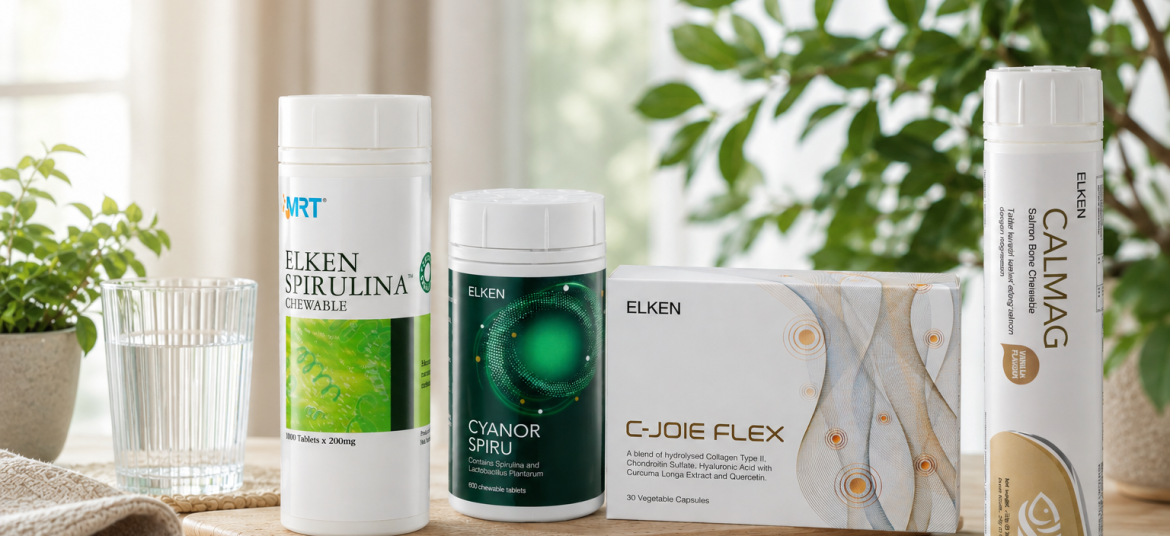
Active people have higher needs for protein (for muscle maintenance and recovery) and antioxidants (because exercise, for all its benefits, also generates oxidative stress your body has to mop up). Spirulina offers both in a convenient form, making it a practical support for an active lifestyle. If keeping active is getting harder because of stiff or aching joints, that’s worth supporting directly too – C-Joie Flex is built for exactly that.
4. Older adults
Ageing changes your nutritional maths in two ways, and spirulina speaks to both.
First, appetite often shrinks with age, so you may simply eat less – and get fewer nutrients as a result. Second, and less obvious, your body’s ability to absorb nutrients tends to decline as you get older. So older adults can be eating reasonably and still come up short. A nutrient-dense, easily taken supplement helps with the first problem; an easily absorbed one helps with the second – which is precisely where modern, better-absorbed spirulina has an edge over the standard kind. Bone and joint support like Calmag is also worth considering as part of an older adult’s daily routine.
5. People who feel run-down despite eating “enough”
This one is less about a category and more about a feeling you’ll recognise.
If you’re constantly tired, sluggish or just flat – and it’s not from a lack of food – you may be experiencing the everyday version of silent hunger: enough calories, not enough of the nutrients your body runs on. It’s one of the most common reasons people look at superfoods in the first place. Spirulina won’t manufacture energy out of nowhere, but by helping to fill genuine nutritional gaps, it supports your body’s own ability to feel less depleted. If this is you, it’s worth a look – though if the tiredness is persistent or severe, see a doctor rather than self-treating, because fatigue can have causes a supplement won’t address.
6. Health-conscious people who want a daily safety net
Finally, the proactive crowd: people who already eat reasonably well but want to cover their bases.
You don’t have to have a problem to benefit from spirulina. Plenty of people take it simply as a daily nutritional safety net – a way to ensure they’re consistently getting a broad spread of nutrients and antioxidants, even on the days their diet slips. If you think of your health as something to maintain rather than repair, a daily superfood top-up fits that mindset well. Our guide to daily wellness habits covers how to build it into a routine that sticks.
A quick note on children
Growing children have high nutritional needs, and spirulina is sometimes used as a nutritional supplement for them. But supplements for children are not a decision to make from a blog article. Always consult a paediatrician or doctor before giving any supplement to a child, and follow age-appropriate dosing on a registered product. When in doubt, a balanced diet should always come first for kids.
Who should be cautious – or avoid spirulina
Just as important as who benefits is who shouldn’t simply dive in. Spirulina is safe for most healthy adults, but you should check with a healthcare professional first – or avoid it – if you:
- Have phenylketonuria (PKU) – spirulina contains phenylalanine, which you must strictly limit.
- Have an autoimmune condition – spirulina may stimulate immune activity, which isn’t always desirable.
- Take blood-thinning or immunosuppressant medication – there’s potential for interaction.
- Are pregnant or breastfeeding – safety data is limited, so caution is sensible.
This isn’t a reason for most people to worry, but it is a reason to choose well-sourced spirulina. If any of the above applies to you, do check with your doctor first. (For why sourcing matters so much, see our guide on how to choose a good spirulina.)
If you’re one of the six, here’s what actually matters
Found yourself on the list? Then the next question isn’t whether to take spirulina – it’s getting the most from it.
For every group above, the benefit depends on one thing: how much your body actually absorbs. This matters most for the people who need it most – older adults and the time-poor, whose absorption is often already compromised. It’s why newer-generation spirulina focuses on being better absorbed rather than just more concentrated. Elken’s Cyanor Spiru, for instance, is engineered specifically for this – smaller, more readily absorbed molecules plus a probiotic for the gut – so more of what you take actually reaches you. If you want the detail, the difference between Cyanor Spiru and regular spirulina breaks it down.
The bottom line: spirulina isn’t for everyone – but if you’re busy, plant-based, active, older, run-down, or simply proactive about your health, you’re exactly who it’s for. Just buy it well-sourced and take it consistently. If you’re in the “be cautious” group, do check with your doctor first.
This article is for general educational purposes and is not medical advice. Always consult a qualified healthcare professional before starting any supplement, especially if you are pregnant, breastfeeding, taking medication, managing a health condition, or considering a supplement for a child. Cyanor Spiru is a nutritional supplement intended to support daily wellness as part of a balanced diet; it is not intended to diagnose, treat, cure or prevent any disease.