

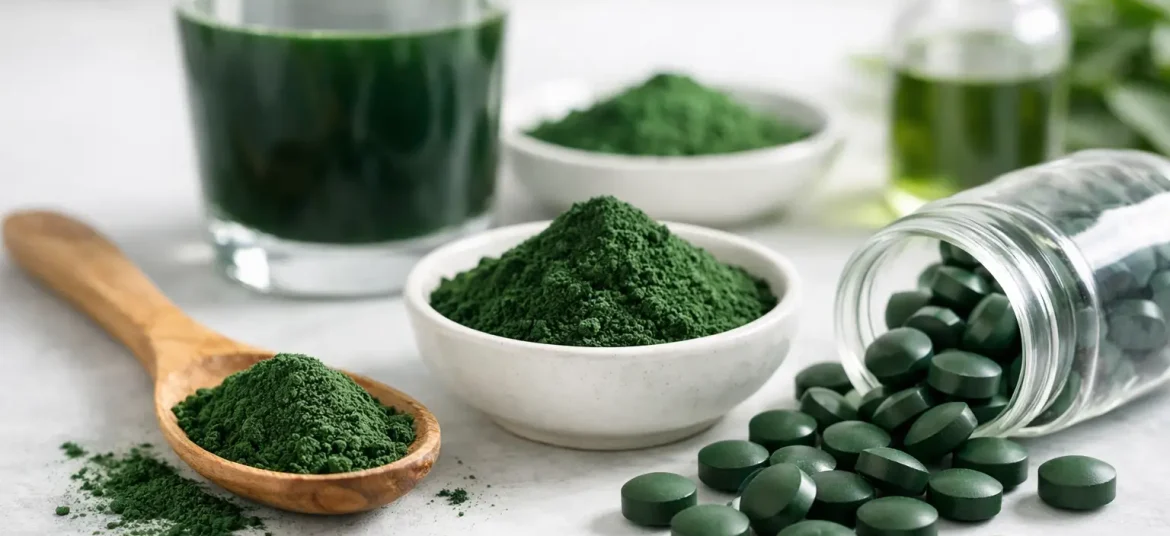
Some supplements are easy to forget after a week. A spirulina supplement usually works best in the opposite way – not as a dramatic one-off, but as a small daily habit that fits around breakfast, work, family meals, and the usual pace of life. That is often why people keep coming back to spirulina. It feels practical.
Spirulina is a blue-green microalgae that has been used as a nutrient-rich food source for many years. In supplement form, it is commonly chosen by adults who want simple daily nutrition support without making their routine complicated. Rather than expecting instant changes, it helps to think of spirulina as part of a steady approach to wellbeing, alongside balanced meals, enough water, rest, and regular movement.
What is a spirulina supplement?
A spirulina supplement is a concentrated form of spirulina, usually made into tablets, capsules, or powder. It is valued for its naturally occurring nutrients, including protein, chlorophyll, carotenoids, and other compounds that support general nutrition. The exact nutrient profile can vary by source and processing method, which is one reason product quality matters.
For many people, the main appeal is convenience. You may not always have time to plan ideal meals, especially on busy weekdays. A supplement cannot replace food, but it can support a more consistent routine when your diet is less predictable than you would like.
This is also where expectations should stay realistic. Spirulina is not a quick fix for tiredness, stress, or poor eating habits. Its role is more modest and more useful than that – it supports everyday nutritional intake when used consistently.
Why people choose spirulina for daily wellness
The interest in spirulina often starts with one simple question: what can I take every day without making my routine harder? For working adults, parents, and people trying to be a bit more mindful about what they consume, spirulina makes sense because it is straightforward.
Some people choose it as part of a broader vitality routine. Others prefer it because it feels lighter and easier to maintain than a shelf full of separate products. It may also appeal to those who want plant-based nutrition support in a compact form.
There is also the routine factor. Supplements that require complicated timing or preparation are often the first to be skipped. Spirulina tends to be easier to take consistently, which matters more than people sometimes realise. A simple product taken regularly often fits better into real life than a complicated one taken only occasionally.
How to take a spirulina supplement consistently
Consistency matters more than perfect timing. Most people do well taking spirulina at the same time each day, often with breakfast or after a meal. That approach is easier to remember and may feel gentler for those with a sensitive stomach.
If you are new to spirulina, starting with a modest amount can be sensible. This gives you time to see how it fits into your routine and whether you prefer tablets or powder. Tablets are usually the easiest option for convenience, especially if you leave home early or want something simple to keep at your desk or in your bag.
Powder can work well for people who already make smoothies or mix drinks at home, but taste can be a deciding factor. Spirulina has a distinct flavour that some people enjoy and others do not. There is no right answer here. The best format is the one you will actually use regularly.
Water intake matters too. If spirulina is part of your morning routine, pairing it with good hydration can make the habit feel more complete. In many households, wellness routines become more sustainable when they are linked to something already established, such as breakfast, preparing the children for school, or settling in at work.
What to expect from a spirulina supplement
The most useful expectation is gradual support rather than a dramatic effect. Some people notice that they feel better about their routine simply because they are being more consistent with daily nutrition. Others appreciate the reassurance of adding a nutrient-dense supplement alongside a busy schedule.
The timeline can vary. If your meals are irregular and you are trying to build better habits overall, spirulina may feel like one helpful part of that change. If you already eat well and stay active, you may view it more as extra nutritional support than something you actively feel.
That difference matters. Wellness products often work within the context of the rest of your lifestyle. Sleep, hydration, meal quality, and stress levels all influence how supported you feel day to day. A spirulina supplement should be seen as part of the picture, not the whole picture.
Who spirulina may suit best
Spirulina can suit adults looking for simple daily nutritional support, especially those with busy routines who want something easy to maintain. It may also appeal to people who prefer plant-based ingredients or want a supplement that fits neatly into a broader wellness plan.
For families, the decision is usually less about trends and more about practicality. Is it easy to take? Can it become part of an existing routine? Does the product come from a trusted brand with clear quality standards? These questions are often more useful than chasing the most exciting claim on the label.
At the same time, suitability depends on the individual. Pregnant or breastfeeding women, people with specific health concerns, or anyone taking regular medication should check with a qualified healthcare professional before adding a new supplement. That is not about alarm. It is simply the sensible way to choose products responsibly.
Choosing a spirulina supplement with confidence
Not all spirulina products are equal. When comparing options, quality control, ingredient clarity, and format should come first. A good product should make it clear what you are taking, how to take it, and how it fits into daily use.
Look at the serving guidance and ask whether it suits your routine. A product can look impressive on paper, but if the serving style feels inconvenient, consistency may suffer. For many consumers, especially those balancing work and home responsibilities, ease of use is part of product quality.
It is also worth paying attention to how the brand explains the product. Clear, measured education is usually a good sign. Credible wellness support is built on practical guidance, not exaggerated promises.
Within a daily nutrition routine, spirulina is often chosen because it complements rather than complicates. That can be especially helpful when your household is already trying to make better choices in other areas, such as hydration quality, mealtime planning, or general self-care. Elken Spirulina is positioned with this kind of everyday consistency in mind, making it easier for consumers to build a routine that feels manageable.
Spirulina supplement routines that work in real life
The best supplement routine is one that survives busy days. That usually means attaching it to a habit you already have. Breakfast is the obvious choice, but lunch can work just as well if mornings are rushed. Some people keep their supplement near the kettle, the dining table, or their work set-up as a visual reminder.
You do not need a perfect wellness schedule. If you miss a day, the answer is simply to continue the next day rather than overthinking it. Daily support works through repetition over time, not through chasing perfection.
A simple routine might look like this in practice: a balanced breakfast, your spirulina supplement, enough water through the day, and meals that are reasonably varied rather than strict. That kind of steady structure is often far more realistic than trying to overhaul everything at once.
Common questions about spirulina
Is spirulina a replacement for vegetables or balanced meals?
No. Spirulina is a supplement, not a substitute for a varied diet. It is best used to support your routine, not to compensate for consistently poor eating habits.
Is tablet or powder better?
It depends on preference. Tablets are usually more convenient and easier to take on the go. Powder may suit people who already prepare drinks or smoothies at home.
When should I take spirulina?
There is no single perfect time. Taking it with a meal and at the same time each day is often the easiest approach.
How long should I take it before deciding if it suits me?
Give it enough time to become part of your normal routine. A fair trial is usually measured in weeks rather than days, especially when your goal is consistent nutritional support.
A spirulina supplement is not about chasing dramatic change. It is about giving your daily routine a little more structure, a little more nutritional support, and a little more intention – the kind of habit that feels sustainable long after the novelty has worn off.