

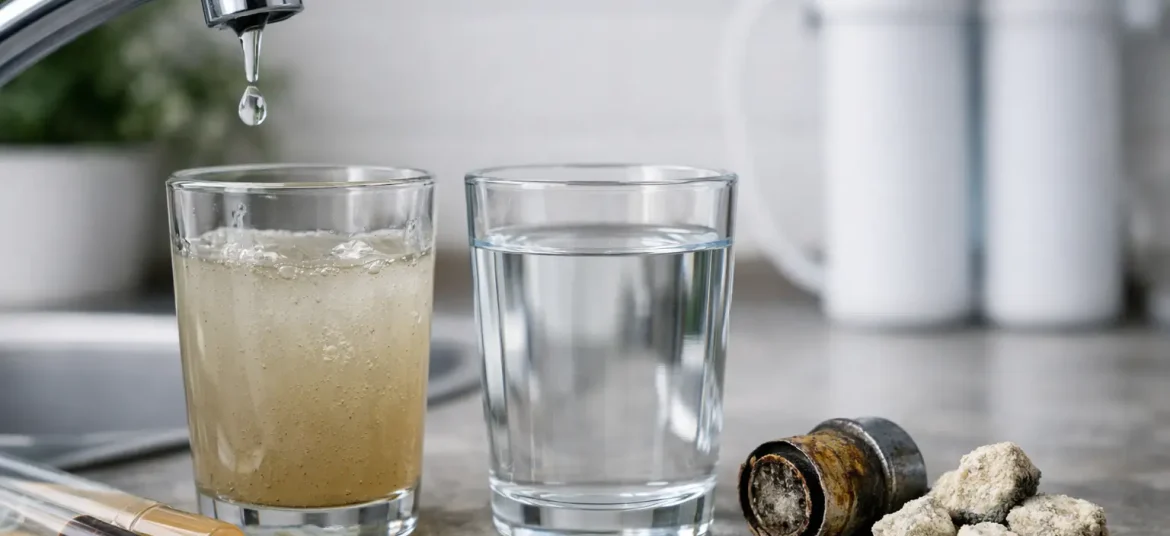
You notice it first in small ways. Tea turns cloudy, the kettle scales up faster than expected, or tap water has a chlorine smell that makes everyone reach for other drinks instead. Water quality problems at home often show up as everyday annoyances before they become something you want to investigate properly.
For most households, the issue is not one dramatic sign. It is a mix of taste, odour, appearance, appliance build-up, and uncertainty about what is actually coming through the tap. That uncertainty matters because water is part of daily life in so many ways, from drinking and cooking to washing fruit, making baby formula, and filling bottles before work or school.
What water quality problems at home usually look like
The most common signs are fairly easy to spot. Water may taste metallic, slightly salty, bitter, or strongly chlorinated. It may smell earthy, musty, or like a swimming pool. Sometimes it looks cloudy when first poured, or leaves stains around sinks and taps.
Hard water is another frequent concern. It often appears as white residue on kettles, shower screens, and taps. While this does not automatically mean the water is unsafe, it can affect taste, cleaning results, and the lifespan of appliances. Clothes may feel rough after washing, and soap may be harder to rinse away.
There are also less visible issues. Sediment, ageing pipes, inconsistent municipal treatment, and storage tank conditions can all affect water quality without making the problem obvious at first glance. This is why many families pay attention not just to what they can see, but also to consistency. If the water tastes different from one week to the next, that change is worth noting.
Why these problems happen
Water quality is shaped by more than one factor. Municipal treatment plays a major role, but by the time water reaches your kitchen tap, it may also be influenced by local piping, building tanks, household plumbing, and how long water sits in the system.
In many homes, chlorine is the first thing people notice. It is commonly used in water treatment, and for good reason, but the residual taste and smell can make daily drinking less pleasant. Some households are comfortable with it, while others find it enough to reduce how much water they drink at home.
Mineral content is another variable. Calcium and magnesium contribute to hardness, which is not unusual in domestic water supplies. Hard water tends to create scale and can change how hot drinks taste. On the other hand, very soft water may taste flat to some people. Preferences differ, which is why the right filtration setup often depends on both water conditions and household habits.
Older plumbing can add another layer. Corrosion, sediment, or worn internal surfaces may affect taste and clarity. In high-rise living, shared tanks and internal building systems can also influence water quality by the time it reaches individual units. This does not mean every building has a serious problem, but it does explain why two homes in the same area may have very different experiences.
Water quality problems at home are not all the same
This is where many people get frustrated. They buy a simple jug filter expecting every issue to disappear, only to find that the chlorine smell improves but scale in the kettle remains. Or they choose a system for cleaner taste, when what they really need is broader filtration support for sediment and everyday household use.
The practical point is that one solution does not fit every home. If your main concern is taste and odour, a different setup may suit you than if you are managing visible particles, hard water residue, or variable supply quality. Good product choice starts with being clear about the problem you are trying to solve.
For families, routine also matters. A couple who mainly drink water at home may prioritise drinking quality and convenience. A larger household may want a system that supports frequent refilling, cooking, and packed water bottles throughout the day. The best option is usually the one that fits both your water conditions and the way your family actually lives.
How to assess your water at home
Start with observation. Taste the water plain, not only with ice or cordial. Smell it in a clean glass. Check whether cloudiness clears after a minute, which may suggest trapped air rather than a more serious issue. Look at your kettle, shower head, and tap aerators for signs of mineral build-up.
Next, notice patterns. Does the water seem different after heavy rain, after time away from home, or only from certain taps? Does the first flow in the morning smell stronger? These details can help you distinguish between a one-off change and a recurring issue.
If concerns continue, a proper water test can provide a clearer picture. That is often the most sensible step when the issue is persistent or difficult to identify. Guesswork can lead to buying the wrong type of filter, which costs more over time and may not improve the experience you care about most.
Choosing a filtration approach that suits daily use
When looking at filtration, it helps to think in layers rather than marketing claims. Some systems are designed to reduce sediment and improve clarity. Others focus on chlorine, odour, and taste. Some are better suited for drinking water, while others are part of a broader home water routine.
If the main goal is better-tasting water for regular drinking, a drinking water system may be enough. This can make it easier for adults and children to drink more water consistently because the experience is simply more pleasant. If your concerns include visible particles or fluctuating supply conditions, you may want something more comprehensive.
Hydrogen water is also part of the conversation for some households, especially those building a more intentional hydration routine. In that case, filtration still comes first. Hydrogen related features are most relevant when the water going in is already appropriately filtered for everyday consumption. The quality of the source water and the maintenance of the unit both affect the overall experience.
This is one area where a product education approach matters. A premium system should not only offer features, but also clear guidance on usage, capacity, replacement schedules, and what it is realistically designed to improve.
Maintenance is where results are kept or lost
Even a well-chosen purifier can underperform if maintenance is inconsistent. Filters have a working lifespan, and once they are overdue for replacement, water flow, taste, and performance may change. Some people assume the unit is no longer effective as a category, when the real issue is simply overdue servicing.
Storage hygiene matters too. If your home uses a tank or refillable container, regular cleaning is part of water quality management. It makes little sense to improve filtration only to overlook the parts of the system that hold or dispense the water afterwards.
This is especially relevant in busy family homes. When everyone is using the same machine, small habits add up. Wiping down the dispenser area, following cartridge replacement guidance, and using the unit as intended are simple steps, but they make a visible difference over time.
When a water issue is about comfort, not alarm
Not every water problem is a sign of danger. Sometimes the issue is mainly about comfort, convenience, and confidence. Water that smells strongly of chlorine may still meet treatment standards, yet still be unpleasant to drink. Hard water may not stop you using the kettle, but it can make the whole kitchen feel harder to maintain.
That distinction matters because it helps households respond calmly and sensibly. You do not need to assume the worst to decide that your drinking water should taste better, feel cleaner to use, and fit more comfortably into daily routines. Better water habits often start with making good water easier to enjoy.
For households considering an upgrade, the most useful question is not which system sounds most advanced. It is which one matches your actual needs, your kitchen space, your usage volume, and your willingness to keep up with maintenance. A simpler solution that gets used every day is often more valuable than a complex one that becomes inconvenient.
One thoughtful choice can change more than the water itself. It can make refilling bottles more automatic, encourage more home cooking, and make daily hydration feel less like effort and more like a normal part of family life.