

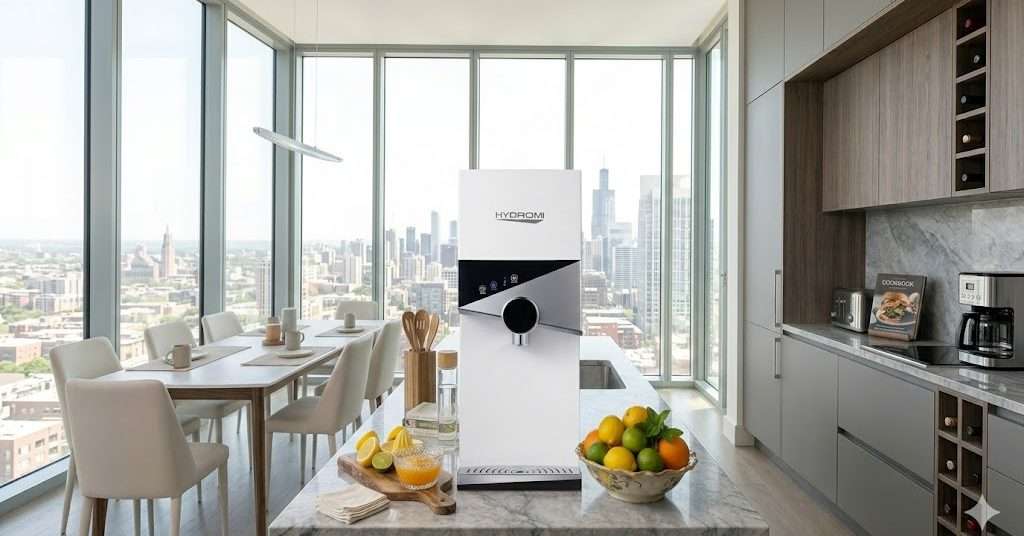
If you have ever filled a glass at home and wondered whether your purifier is actually right for your household, you are asking the right question. The best water purifier features are not always the most expensive or the most heavily advertised. They are the ones that match your water source, your family’s daily routine, and the level of care you are realistically willing to maintain.
That matters because a purifier is rarely a one-size-fits-all appliance. A couple in a city flat may prioritise compact design and low maintenance, while a larger family may care more about storage capacity, refill speed, and ease of filter replacement. In many Malaysian homes, where drinking water is part of a busy routine of school runs, office hours, exercise, and family meals, convenience matters just as much as filtration performance.
The best water purifier features start with the right filtration method
Before looking at touch panels, elegant housings, or extra functions, start with filtration itself. This is the foundation of any purifier. Different systems are designed to reduce different impurities, and the right choice depends on what is coming into your home.
Activated carbon is commonly used to improve taste and reduce chlorine and certain odours. It is often appreciated by households that want water to taste cleaner and more pleasant for daily drinking, tea, or cooking. Ultrafiltration can help reduce fine particles and selected contaminants while retaining useful minerals, depending on the system design. Reverse osmosis is more intensive and can reduce a wider range of dissolved substances, but it may also affect taste and flow rate, and some households may find it more than they need.
This is where many buyers get caught out. A more aggressive system is not automatically better. If your incoming water quality is already fairly stable, a purifier with a well-balanced multi-stage filtration setup may be more practical than a system designed for much heavier treatment. The best feature here is not complexity for its own sake, but suitable filtration for your actual use.
Look for clear filter stage information
A purifier should make it easy to understand what each filter does. If product information is vague, that is usually not a great sign. Clear stage descriptions help you know whether the system focuses on sediment reduction, chlorine reduction, taste improvement, membrane-based filtration, or additional treatment technologies.
This kind of transparency matters for two reasons. First, it helps you compare products more sensibly. Second, it gives you a realistic idea of what to expect. No purifier should be treated like a mystery box. A credible product should explain its technology in simple, consumer-friendly language.
Good water taste is not a small detail
People often talk about safety first, which is fair, but taste is what shapes everyday habits. If water tastes flat or unpleasant, families tend to drink less of it or switch back to sweetened drinks more often than they intended.
A purifier that supports better taste can make hydration easier to maintain throughout the day. That may sound basic, but it is often one of the most useful quality-of-life improvements a household notices.
Maintenance is one of the best water purifier features to prioritise
A purifier only performs well when it is maintained properly. That is why easy maintenance is not an extra convenience. It is central to long-term value.
Look for features such as straightforward cartridge access, clear replacement guidance, and filter change indicators. Some systems are technically advanced but awkward to maintain, which can lead to delays in servicing or inconsistent use. For busy households, that usually becomes frustrating quite quickly.
A sensible design respects real life. If replacing a filter feels complicated, many people will postpone it. If the system gives timely reminders and the parts are easy to identify, maintenance becomes part of the household routine rather than a chore.
This is also where after-sales support matters. A purifier should not feel excellent on the day of purchase and difficult every month after that. Reliable access to replacement filters and clear maintenance instructions make a meaningful difference over time.
Capacity and flow rate should match your daily routine
Some people focus on appearance and forget to ask a practical question – how much water does the household actually use in a day?
A small-capacity unit may be perfectly fine for one or two adults who mostly refill bottles in the morning and evening. It may feel limiting, however, in a home where several family members are preparing drinks, cooking, and filling bottles before heading out. In that setting, slow flow rate or limited storage can become annoying very quickly.
Think about peak-use moments. Breakfast time, after-school hours, and family dinners often put the most pressure on a purifier. A system that performs well under those conditions usually feels more satisfying in daily use than one that looks impressive but struggles when everyone needs water at once.
Hot, ambient, or chilled water options
For some households, temperature functions are essential. Parents may value warm water for preparing drinks, while others may enjoy chilled water after exercise or on hot afternoons. These features are useful, but they should be treated as lifestyle preferences rather than default must-haves.
If you mainly want dependable purified water and minimal electricity use, a simpler ambient system may be the better fit. If convenience is the top priority, multi-temperature dispensing can be worth paying for.
Safety features matter more in family homes
If there are young children at home, safety deserves close attention. Hot water dispensing should ideally include a child lock or similar protection. A stable build, hygienic dispensing area, and well-designed controls also make a difference in everyday use.
Hygiene-related design is often overlooked. Covered nozzles, touch points that are easy to clean, and materials that resist staining or buildup help support cleaner use over time. These details may not be the reason someone first notices a purifier, but they often become the reason they remain happy with it.
Smart alerts and monitoring can be genuinely useful
Not every smart feature adds value, but some do. Filter replacement alerts, maintenance reminders, and basic status indicators can help households stay on top of care without guessing.
This is particularly helpful for people who want performance without needing to remember technical timelines. A clear display or indicator light can remove uncertainty and make the purifier feel easier to manage.
That said, more digital features are not always better. If a smart interface is confusing or overly sensitive, it may become an irritation rather than a benefit. The best approach is simple, useful information that supports regular care.
Size, placement, and design still matter
A water purifier is part of your kitchen or dining area, not a hidden technical device in a back room. It needs to fit your available space and your movement around it.
Countertop models may suit households that want easier access and simpler installation. Larger freestanding units may suit bigger families or homes with a dedicated utility area. The best choice depends on layout, not only on feature count.
Good design is also practical. Easy refill height, intuitive controls, and a form that does not dominate the room all contribute to a better ownership experience. Premium design should support everyday use, not just visual appeal.
Consider wellness-focused features with realistic expectations
Some households are interested in advanced hydration options, including hydrogen-related functions. These features may appeal to people who are building more intentional daily wellness routines and want a purifier that fits into that lifestyle.
The key is to stay realistic and informed. A wellness-oriented feature should be understood in terms of daily use, convenience, and product design, not exaggerated expectations. If it helps encourage more regular water intake and fits your routine well, it may be worth considering. For households exploring this area, solutions such as Hydromi are often approached as part of a broader hydration routine rather than as a stand-alone answer to every wellness goal.
Choosing the best water purifier features for your household
The right purifier is usually the one that balances filtration quality, ease of maintenance, suitable capacity, and comfort in daily use. It is rarely the product with the longest feature sheet. Instead, it is the one that fits naturally into your home and keeps working well with consistent care.
If you live in a smaller home, value simple upkeep, and mainly want better-tasting water for regular drinking, a compact purifier with clear filter stages and reliable maintenance support may be ideal. If your household is larger, or if warm and chilled water are part of your routine, capacity and dispensing options may deserve more weight.
A good buying decision comes from asking practical questions. What does your family actually need each day? How often are you prepared to maintain the unit? Will the purifier fit your space comfortably? Those questions usually lead to a better choice than chasing the most advanced specification.
The best purifier features are the ones you will appreciate every day – when the water tastes right, the unit is easy to maintain, and the whole household uses it without thinking twice.