

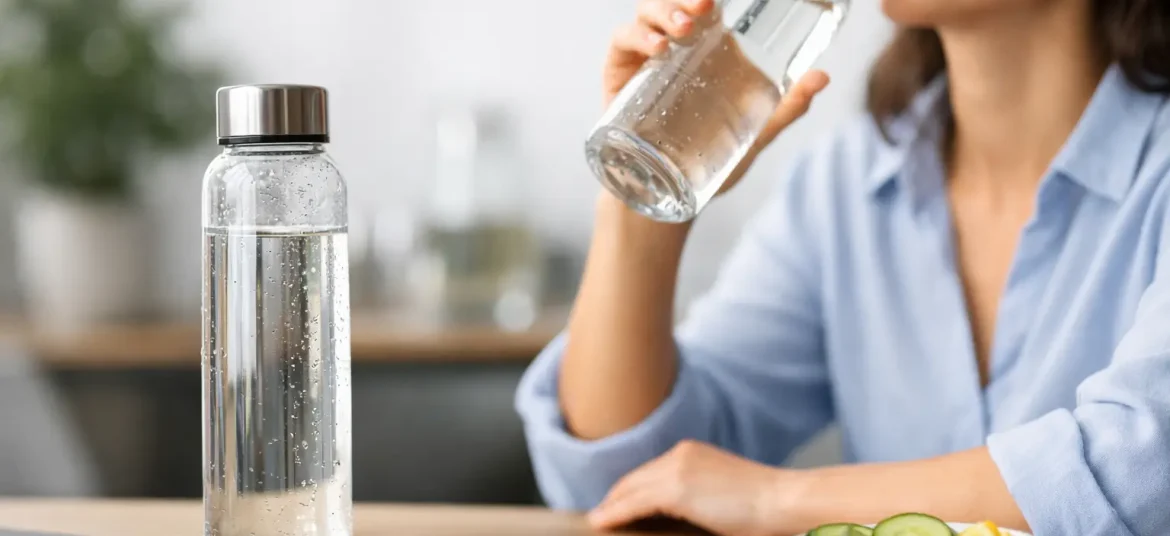
You do not usually notice a hydration routine when it is working. You simply wake up, have a drink, carry on with your day, and feel more settled rather than playing catch-up by late afternoon. That is the practical goal when learning how to build hydration habit – not perfection, but a routine that feels easy enough to repeat.
For many people, the problem is not forgetting that water matters. It is that the day fills up quickly. A rushed school run, long hours at a desk, hot weather, coffee breaks, commuting, exercise, and family meals can all shift drinking water into the background. The most reliable hydration habits are built around real routines, not good intentions.
Why hydration habits often fail
A lot of advice sounds simple: drink more water. In practice, that is too vague to follow consistently. Habits tend to break down when they rely on memory alone, when the water available is not appealing, or when the target feels unrealistic.
Taste and convenience matter more than people expect. If your water is not pleasantly drinkable, you are less likely to reach for it often. If it is not nearby, the extra effort becomes another reason to delay. This is why hydration is not only about quantity. It is also about access, timing, and the quality of the water you are drinking throughout the day.
There is also a common all-or-nothing mindset. Some people aim for a perfect intake from day one, miss it by noon, and stop trying. A better approach is to create a routine that supports regular sipping across the day, then adjust based on your schedule, activity level, and environment.
How to build hydration habit in daily life
The easiest way to make hydration more consistent is to attach it to actions you already do without thinking. In habit building, these existing actions are more useful than motivation because they happen whether you feel disciplined or not.
Start with three anchor moments. A glass after waking, one with each main meal, and one during your mid-morning or mid-afternoon break is a sensible baseline for many adults. That already creates structure without forcing constant tracking.
If you work at a desk, keep water within arm’s reach rather than in the kitchen. If you are often in the car, have a bottle ready before you leave home. If your mornings are busy, pour your first glass before bed so there is one less step to think about. Small environmental changes remove friction, and that matters more than grand plans.
Use cues instead of relying on memory
A cue is a trigger that tells your brain what happens next. It could be brushing your teeth, switching on your computer, sitting down for lunch, or returning from the school run. When you repeatedly pair water with a cue, the action begins to feel automatic.
For example, if you always drink water before your morning coffee or tea, you create a sequence that is easy to maintain. If you always refill your bottle before a meeting or before leaving the house, you reduce the chance of going hours without drinking.
Digital reminders can help at first, but they are rarely the full answer. If every sip depends on a phone alert, the habit may disappear when notifications are ignored. Physical cues tend to last longer because they become part of your routine and environment.
Make the water easy to enjoy
People often underestimate the role of preference. Some enjoy chilled water, others find room temperature easier to drink. Some prefer a bottle with measurements, while others drink more from a glass or tumbler at home. The best format is the one you naturally use.
Water quality can also influence consistency. If the taste or smell puts you off, you may unconsciously choose other drinks instead. For households that want a more dependable hydration routine, having a home water solution that supports cleaner, better-tasting water can make the habit easier to maintain. This is one reason some families explore water purification and hydrogen water options as part of a broader wellness routine – not as a shortcut, but as a practical way to make regular drinking more appealing and convenient.
Build your hydration habit around your real schedule
There is no single pattern that suits everyone. A parent managing school timings and household tasks will approach hydration differently from someone who spends most of the day in an office or on the move. The habit needs to fit the rhythm of your life.
If your day starts early, front-loading some of your intake in the morning can help before distractions build. If you exercise in the evening, plan to drink steadily during the afternoon rather than trying to make up for everything afterwards. If you regularly spend time outdoors in warm conditions, you may need more attention to timing and refills.
The point is not to follow a rigid formula. It is to notice where long gaps happen and solve those gaps with a simple routine.
At home
Home is often the easiest place to shape better habits because you control the environment. Keep a filled jug or bottle visible on the dining table or kitchen counter. Visibility matters. When water is hidden in the fridge or stored away, people tend to forget it.
For families, linking water to shared moments can help children and adults alike. A drink at breakfast, after coming home, and with dinner creates a predictable pattern. It feels less like a rule and more like part of the household routine.
At work
Workdays can be deceptive. You may feel busy all day and realise by 4 pm that you have barely had any water. The simplest fix is often a dedicated bottle at your desk and a refill habit tied to natural pauses such as lunch or toilet breaks.
If you spend much of the day in meetings, a bottle with a familiar volume can help you gauge whether you are drinking regularly without needing to track every millilitre. This is especially useful for people who prefer straightforward routines rather than detailed apps or charts.
What to expect when you are starting
When people ask how to build hydration habit, they often want a quick target. In reality, consistency matters more than chasing a perfect number immediately. You may notice that the first week simply involves remembering more often. That is progress.
You might also find that drinking more regularly changes your toilet habits at first. This is normal for many people as the routine settles. If you are increasing intake too quickly and it feels uncomfortable, ease into it more gradually. Sustainable habits should support your day, not interrupt it.
It also helps to be realistic about drinks beyond plain water. Tea, coffee, soups, and other fluids may all contribute in some way to overall intake, but relying mostly on sweet drinks is usually not the best long-term pattern. For many households, the easiest foundation is still plain water that is easy to access and pleasant to drink.
When water quality becomes part of the habit
A hydration habit is easier to keep when your water source supports daily use. That includes taste, convenience, and confidence in what your household is drinking. For some families, this is where a dedicated water system becomes relevant.
Hydrogen water and water purification are often explored by people who want to improve their routine at home in a practical way. The decision depends on your priorities. Some are mainly focused on filtration and taste. Others are interested in added features and how these fit into an everyday wellness routine. The key is to choose a solution you will use consistently and maintain properly.
If you are considering a home system such as Hydromi, look beyond features on paper. Think about refill convenience, cleaning and maintenance, household size, and where the unit fits into your daily flow. A good product choice is one that supports repeated use with minimal friction.
A realistic way to stay consistent
Most habits are not built by doing more. They are built by making the right action easier to repeat. Keep water visible, connect it to moments that already happen, and choose a water setup that suits your household rather than complicating it.
Some days will be better than others. Travel, festive meals, school holidays, and busy work periods can all disrupt routines. That does not mean the habit is gone. It simply means you return to your anchors – after waking, with meals, during breaks, and before leaving the house.
A lasting hydration routine usually feels ordinary, and that is exactly why it works. When drinking water becomes one of the simplest parts of your day, you no longer need to keep starting over.