

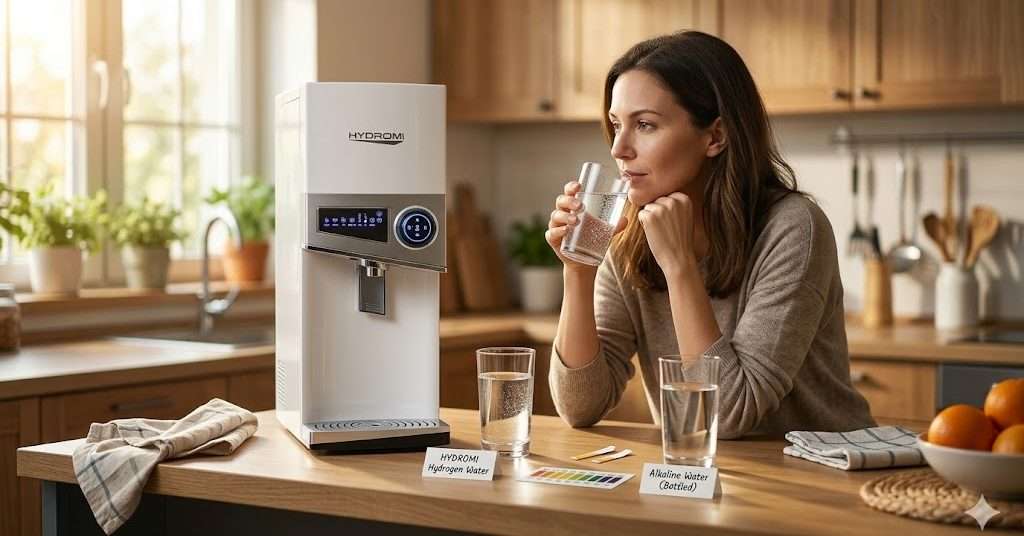
If you have ever stood in front of a water appliance listing and wondered whether hydrogen water vs alkaline water is really a meaningful choice, you are not alone. The terms often appear together, but they are not the same thing. For families trying to improve daily hydration at home, the better question is simpler – what does each type of water actually do, and which one fits your routine?
Hydrogen water vs alkaline water: what is the difference?
The clearest difference is this: hydrogen water is regular water that contains dissolved molecular hydrogen, while alkaline water is water with a higher pH level than standard drinking water. Those are two separate characteristics.
Hydrogen water focuses on hydrogen content. The idea behind it is not that the water becomes a different category of liquid, but that it carries dissolved hydrogen gas that you drink as part of your normal hydration routine. Alkaline water, on the other hand, focuses on pH. A higher pH means the water is less acidic on the pH scale.
Because the names are often used side by side, people sometimes assume alkaline water and hydrogen water deliver the same experience. They do not. Some systems may produce water that is both hydrogen-rich and alkaline, but the terms themselves describe different features.
That distinction matters when choosing a product. If you are interested in antioxidant support linked to dissolved hydrogen, pH alone is not the main point. If you are mainly looking at taste preference or a higher pH reading, then hydrogen content may not be your priority.
How hydrogen water works in daily use
Hydrogen water is made by infusing water with molecular hydrogen. In practical terms, this usually happens through a specialised water system or bottle designed to generate or retain dissolved hydrogen.
For most households, the appeal is routine friendly use. You drink it as you would normal water – with meals, during the working day, after light exercise, or while travelling between appointments. Many people exploring hydrogen water are not looking for something complicated. They want hydration support that fits naturally into everyday life.
A useful point to keep in mind is that hydrogen is a gas, so freshness matters. The hydrogen content can reduce over time once the water is exposed to air or stored too long. That is why product design, storage method, and drinking timing all matter more than marketing phrases.
From a practical consumer perspective, the best hydrogen water solution is usually one that makes regular use easy. If a system is difficult to maintain or awkward to use, consistency tends to drop. For busy homes, convenience is part of product quality.
What alkaline water is designed to do
Alkaline water is defined by pH rather than hydrogen concentration. Standard drinking water is often close to neutral, while alkaline water sits above that on the pH scale.
Some people choose alkaline water because they prefer the taste. Others are drawn to the idea of balancing acidity in the diet, though it helps to keep expectations realistic. The body already regulates its own pH very carefully, so alkaline water should not be framed as a dramatic fix. For most consumers, it is better viewed as a hydration preference rather than a cure-all.
This is where confusion can happen. A higher pH sounds technical, so it can feel automatically superior. In reality, pH is just one property of water. It does not tell you everything about filtration quality, dissolved hydrogen content, mineral profile, or how suitable the appliance is for your household.
Hydrogen water vs alkaline water for home routines
For everyday family use, the better option often depends on what you value most.
If your priority is a hydrogen-focused wellness routine, hydrogen water is the more relevant choice. This is especially true for people who are specifically looking into hydrogen wellness and want a system designed around that feature, not just a general pH adjustment.
If your priority is simply drinking water with a higher pH and a particular mouthfeel, alkaline water may be enough. Some households enjoy that taste and feel satisfied with that single feature.
But many consumers are not choosing between two abstract science terms. They are choosing between appliances, maintenance requirements, water source quality, counter space, and whether everyone in the house will actually use the system. In that context, filtration and usability are just as important as the water label.
For example, in a typical Malaysian household, hydration habits are shaped by weather, commuting, office hours, school routines, and shared family meals. A water solution needs to keep up with daily demand. If it takes too much effort to prepare each glass, it may sound impressive on paper but become inconvenient in practice.
Why filtration still matters
One mistake people make when comparing hydrogen water vs alkaline water is focusing only on the end result and ignoring the starting water quality. Before discussing hydrogen or pH, it makes sense to look at filtration.
Cleaner, better filtered water provides the foundation for a more reliable drinking experience. That includes taste, odour, and confidence in daily use. A well-designed system should help address water quality concerns first, then deliver its additional feature set clearly and consistently.
This is one reason product education matters. A good water system is not only about what claim appears on the front panel. It is also about how the technology works, how often filters need changing, how easy it is to clean, and whether the system suits your household size.
When comparing options, ask practical questions. How is the water treated? How is hydrogen generated or retained? What maintenance is required? How often will parts need replacing? Clear answers are usually a better sign than dramatic promises.
What to expect realistically
Hydrogen water and alkaline water are both best understood as lifestyle products that support daily hydration choices. They are not shortcuts, and they do not replace basics such as drinking enough water, eating sensibly, and maintaining a balanced routine.
Hydrogen water may appeal to people who want a more specific wellness-focused hydration option. Alkaline water may appeal to those who prefer a higher pH profile. Neither choice needs to be overcomplicated.
It also helps to remember that personal experience can vary. One person may notice they enjoy the taste of alkaline water more. Another may prefer a hydrogen water routine because it aligns with the product features they were actually seeking. The right fit is often the one you can use consistently and confidently.
Choosing a system for your household
When selecting a home water solution, focus on the complete picture rather than a single headline feature. Technology matters, but so does fit.
A compact household may prefer a countertop system that is easy to refill and maintain. A larger family may need something with stronger capacity and simple day-to-day operation. If older parents or children will use it too, ease of use becomes even more important.
Look for straightforward product information, reliable maintenance guidance, and features that match your real habits. If hydrogen water is your priority, choose a system built with that purpose in mind rather than assuming any alkaline unit will provide the same result. If you are comparing hydrogen-focused options, it is sensible to pay attention to freshness, filtration support, and practical upkeep.
For readers exploring dedicated hydrogen wellness solutions, the Hydromi range on https://www.elken.com is designed to support everyday hydration routines with a stronger focus on hydrogen water education and home use suitability.
So which is better?
There is no universal winner because the better choice depends on what you are actually comparing. Hydrogen water is not simply alkaline water with better marketing, and alkaline water is not a substitute for hydrogen-rich water if dissolved hydrogen is the feature you want.
If you care most about hydrogen content and the wellness positioning that comes with it, choose hydrogen water. If you care more about pH and drinking preference, alkaline water may suit you. If you are buying for a household, also weigh filtration, maintenance, convenience, and consistency of use.
The smartest choice usually feels less dramatic than people expect. It is the one that suits your family, your kitchen, and your routine well enough to become part of everyday life.
Good hydration habits are built glass by glass, not claim by claim. When the water solution fits naturally into your day, that is often when it starts to make the most sense.