

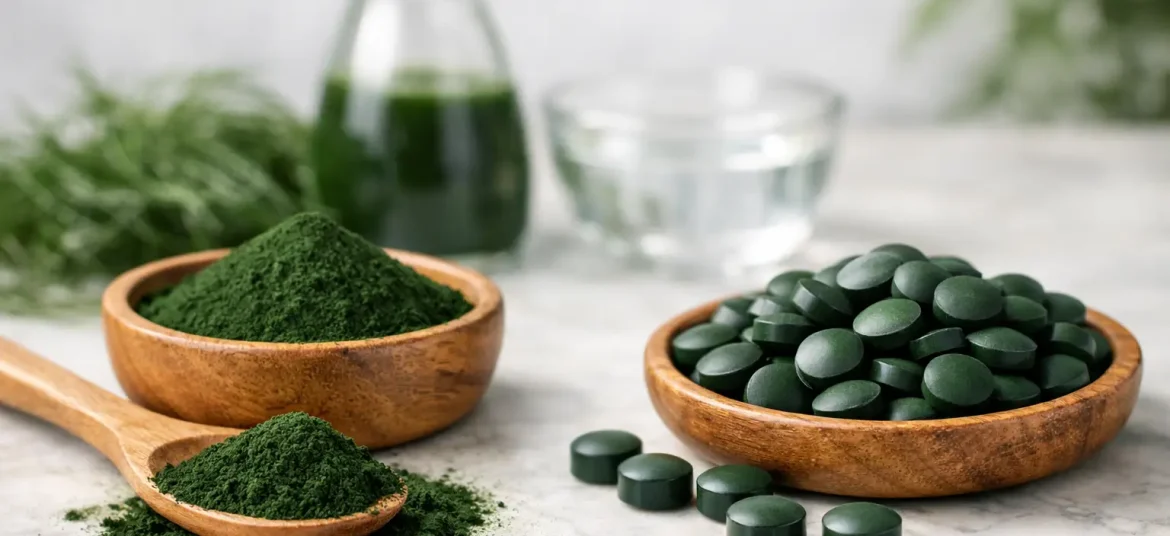
Some people stop taking spirulina for one simple reason: the format does not suit their routine. That is why spirulina powder vs tablets is not just a packaging question. It affects taste, consistency, portability and how likely you are to keep using it day after day.
If you are choosing spirulina for daily nutrition support, the better option is usually the one you will actually take regularly. Powder and tablets contain the same core ingredient, but they feel very different in everyday use. For busy mornings, travel, family routines or post-exercise habits, that difference matters more than many people expect.
Spirulina powder vs tablets: what is the real difference?
At the most basic level, both formats are made from spirulina, a nutrient-dense blue-green algae commonly used to support everyday wellness routines. The main difference is not what spirulina is, but how it is prepared, measured and consumed.
Powder is loose and versatile. You can stir it into water, blend it into smoothies or mix it with juice, depending on your preference. Tablets are pre-portioned and designed for convenience. You swallow them with water, which removes most of the preparation and much of the taste.
This means the choice often comes down to lifestyle rather than theory. If you enjoy customising your routine, powder may feel more flexible. If you want something simple and consistent, tablets are usually easier to manage.
Taste and texture often decide the winner
Many first-time users focus on nutrients, but taste is often what determines long-term use. Spirulina has a distinct earthy, marine flavour. Some people do not mind it, especially when mixed into fruit smoothies or citrus-based drinks. Others find it difficult to enjoy, even in small amounts.
Powder makes that flavour more noticeable because you experience it directly. The smell, colour and texture are all part of the experience. For some, that feels natural and fresh. For others, it becomes a barrier, especially if they are already rushing through breakfast before work or school.
Tablets offer a more neutral experience. Since you swallow them quickly with water, you avoid most of the flavour. This is often the better fit for people who want the benefits of spirulina without changing the taste of their food or drinks.
For Malaysian households where mornings can be fast-paced, tablets may suit adults who want a straightforward routine before leaving home. Powder may suit those who already prepare shakes, juices or lighter breakfasts and do not mind adding one extra step.
Convenience and consistency in daily routines
When comparing spirulina powder vs tablets, convenience deserves more attention than it usually gets. The most carefully chosen supplement is only useful if it becomes part of daily life.
Powder takes a little more effort. You need a spoon, a glass or shaker, and enough time to mix it properly. If you are at home every morning and enjoy preparing your drinks, this may not feel inconvenient at all. In fact, some people like the sense of control that comes with adjusting their serving and combining it with other ingredients.
Tablets are easier to standardise. You know how much you are taking, there is no mixing, and it is simple to carry them in a bag when you are out for the day. This can help with consistency, especially for office workers, frequent travellers or anyone with an irregular schedule.
Consistency is where tablets often have the practical advantage. They remove friction. Less preparation usually means fewer skipped days.
Spirulina powder vs tablets for dosage and portion control
Another useful point of comparison is portion control. Powder can be measured precisely, but only if you measure it carefully each time. A heaped spoon one day and a level spoon the next can create variation.
Tablets are more structured. Each serving is divided into set amounts, so it is easier to follow a routine and monitor intake. For people who prefer clarity and simplicity, that predictability can be reassuring.
That said, powder may still appeal to experienced users who want more flexibility. If you prefer to start with a smaller amount and increase gradually, powder can make that feel more intuitive. It can also work well if you want to split your intake across the day rather than take it all at once.
The best approach depends on your habits. If you like precision without extra effort, tablets are usually the easier choice. If you prefer a hands-on routine, powder offers more room to personalise.
Cost, storage and everyday practicality
Price can vary depending on brand quality, serving size and formulation, so there is no universal winner on cost alone. In some cases, powder may seem more economical per gram. In others, tablets may offer better value because they reduce waste and simplify use.
Practicality also includes storage. Powder needs to be kept sealed and handled carefully to avoid moisture and mess. If the container is opened often in a humid kitchen, that may become less convenient over time. Tablets are generally cleaner to store and easier to use without spills.
This may sound like a small issue, but small inconveniences can disrupt routine. A product that is tidy, easy to carry and simple to take often has a better chance of becoming a lasting habit.
Who may prefer spirulina powder?
Powder tends to suit people who already enjoy functional drinks, smoothies or home-prepared wellness routines. If you like blending ingredients and adjusting flavour, powder can feel more natural than tablets.
It may also suit those who want spirulina to be part of food and drink rather than a separate supplement step. Some people simply prefer mixing everything into one morning shake and getting on with the day.
Powder can also be appealing if you enjoy visible rituals. Measuring, blending and preparing a drink can make your wellness routine feel more deliberate. For some, that improves consistency rather than reducing it.
Still, this only works if you genuinely do not mind the taste and preparation. If either one becomes annoying, enthusiasm usually fades quite quickly.
Who may prefer spirulina tablets?
Tablets are often the better fit for people who want convenience, portability and a more predictable routine. If your mornings are busy, if you commute, or if you prefer a no-fuss supplement format, tablets are generally easier to stick with.
They also suit people who are sensitive to taste. This is one of the most common reasons someone chooses tablets over powder and stays with them long term.
For families trying to build simple daily habits, tablets can feel more manageable because they are easy to count, easy to store and easy to take with water. That simplicity matters, especially when routines already include breakfast, school runs and work schedules.
For brands focused on consistent daily nutrition support, including Elken Spirulina, tablet format is often aligned with what many consumers need most: convenience they can repeat every day.
How to choose the right format for your lifestyle
A good way to decide is to ignore trends and look at your actual routine. Ask yourself when you plan to take spirulina, where you will keep it, and whether you are likely to prepare it properly every day.
If you enjoy smoothies, work mostly from home and do not mind the natural taste, powder could fit well. If you need something quick before heading out, or something easy to keep in your desk drawer or travel bag, tablets may be the better match.
It also helps to think about why you are taking spirulina in the first place. If your goal is steady daily use, the simpler format often wins. A flexible product is not always the most useful product if it complicates your routine.
There is no need to force yourself into one camp because someone else prefers it. The right choice is the one that feels realistic on ordinary days, not only on your most organised ones.
A practical final view on spirulina powder vs tablets
Spirulina powder vs tablets is really a question of routine fit. Powder offers flexibility and works well for people who enjoy mixing it into drinks. Tablets offer speed, convenience and a more neutral experience, which often makes them easier to take consistently.
If you are unsure, start with the format that removes the most barriers. Daily wellness support works best when it feels simple enough to maintain. The smartest choice is rarely the most complicated one – it is the one that fits quietly into your life and stays there.