

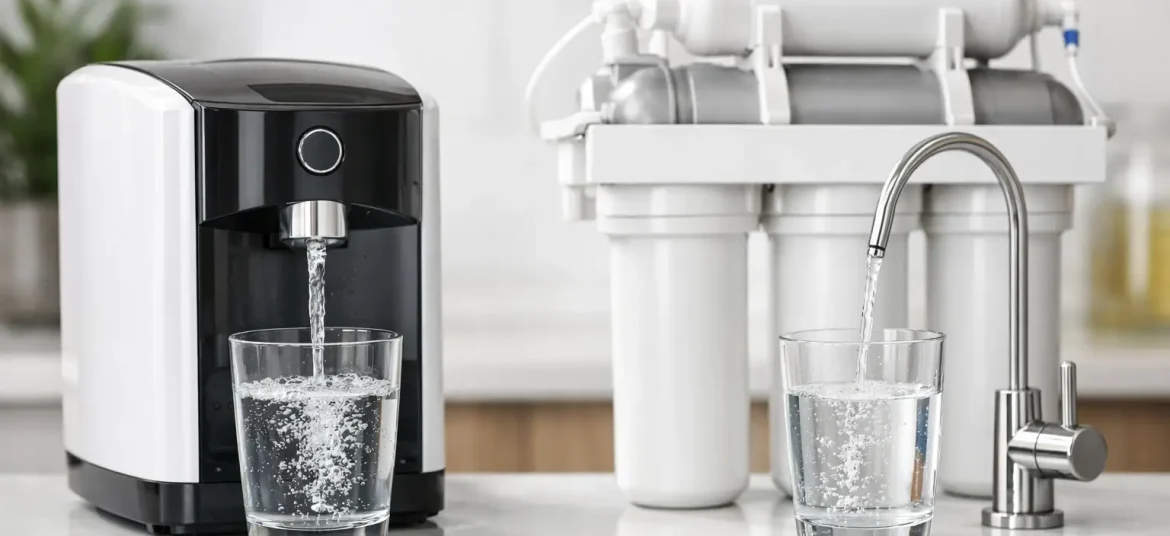
If you have ever stood in front of a product page wondering why one unit is called a water filter and another a water purifier, the confusion is understandable. The names are often used loosely, but they do not always mean the same thing in practice. For families choosing a home water solution, that difference affects taste, convenience, maintenance, and the level of treatment your drinking water receives.
What is the water purifier vs water filter difference?
The simplest way to understand the water purifier vs water filter difference is this: a water filter is mainly designed to reduce selected impurities from water, while a water purifier usually refers to a system that goes further by combining multiple technologies to improve water quality more thoroughly.
A filter may focus on sediment, chlorine, odour, and certain particles. A purifier often includes several stages, such as fine filtration, carbon media, membrane technology, or other treatment methods, depending on the system design. In everyday use, that usually means a purifier is built for a broader treatment role, while a filter is often more targeted.
That said, labels can vary between brands and product categories. Some products called filters are very advanced. Some products called purifiers are still intended for specific household use rather than every possible water issue. The better question is not just what the product is called, but what it is designed to remove and how it fits your daily routine.
How a water filter usually works
A water filter removes or reduces unwanted substances by passing water through a physical or chemical barrier. In most homes, this often means activated carbon, a sediment filter, or a combination of both.
Sediment filtration helps catch visible particles such as rust, sand, or dirt. Activated carbon is widely used to reduce chlorine taste and smell, which can make water more pleasant to drink. This is one reason many households notice an immediate improvement in flavour after installing a basic filter.
For people using municipally treated tap water, a filter can be a practical first step. If your main concern is making water taste cleaner, reducing odour, or lowering common impurities, a filter may be enough. It can also be a good choice for homes that want a more compact and straightforward system.
How a water purifier usually works
A water purifier generally uses more than one treatment stage to address a wider range of water quality concerns. This can include pre-filtration, activated carbon, ultrafiltration, reverse osmosis, ultraviolet treatment, or other built-in technologies depending on the model.
Because of this multi-stage approach, a purifier is often chosen when households want a more complete treatment process rather than simple taste improvement alone. It may be more suitable for families who pay closer attention to drinking water quality, or who want a dedicated system for regular home use.
Some modern systems also incorporate features that support convenience and everyday hydration habits. For example, within the hydrogen and hydration category, consumers may look for water systems that focus not only on filtration but also on how water fits into a consistent daily wellness routine. That is where product education becomes useful, because features can vary significantly even when two products appear similar at first glance.
Water purifier vs water filter difference in real life
The technical distinction matters, but what most people really want to know is how this affects life at home.
If you are filling kettles, cooking rice, making formula, or keeping a bottle on your desk through the afternoon, your priorities are likely to be taste, convenience, and confidence in the water you drink every day. A water filter can improve everyday usability quickly. A water purifier may offer greater reassurance if you want a more advanced treatment process built into your home routine.
There are also trade-offs. A basic filter is often easier to install and maintain. A purifier may require more attention to replacement schedules, servicing, and system care. In return, it may provide broader water treatment depending on the technology used.
This is why one option is not automatically better for everyone. It depends on your water source, your expectations, and how much involvement you want in maintaining the system.
Which contaminants do they remove?
This is where product specifications matter more than the label on the box.
A standard water filter is commonly used to reduce sediment, chlorine, unpleasant taste, and odour. Some also reduce certain heavy metals or other selected substances, but this depends entirely on the filter media and design.
A water purifier may be designed to reduce a wider range of impurities through several stages. For instance, membrane-based systems can target very fine particles, while carbon stages can improve taste and odour. Some systems also include additional treatment technologies for specific water quality objectives.
The key point is to check the actual filtration or purification stages rather than assume all units do the same job. Two products in the same category can perform very differently.
When a water filter makes sense
A water filter is often suitable if your household already receives treated municipal water and your main goals are better taste, reduced chlorine smell, and a cleaner everyday drinking experience. It can also suit smaller homes, rented properties, or buyers who prefer a simpler setup.
For many people, that level of improvement is enough. If the water is generally acceptable but you want it to be more pleasant for drinking and cooking, a filter may offer a practical balance of performance and ease.
This can be especially relevant in busy households where convenience matters. If everyone is rushing out in the morning, a system that is easy to use and easy to maintain often gets used more consistently.
When a water purifier may be the better choice
A water purifier may be the stronger option if you want a more advanced drinking water system, or if you prefer a more comprehensive approach to water treatment. This can appeal to families with children, health-conscious adults building better hydration habits, or households that consume a high volume of drinking water each day.
It may also be the better fit if you are comparing systems as part of a wider wellness routine. Some consumers are not just choosing water treatment. They are also thinking about how to support more consistent daily hydration at home and at work.
For readers exploring this category, the Hydromi range on https://www.elken.com is part of that wider conversation around water quality, hydration habits, and user-friendly features for everyday use.
Cost, maintenance, and what people often overlook
The purchase price is only part of the decision. Filters and purifiers both need ongoing maintenance, and this affects long-term value.
A simpler filter often has lower running costs and a more straightforward replacement schedule. A purifier may involve more components, which can mean more structured maintenance. That is not a drawback on its own, but it should be planned for.
Many households focus heavily on features at the start and then forget to ask practical questions. How often does the cartridge need changing? Is servicing simple? Will the system suit your kitchen space? If the maintenance feels too complicated, even a strong product can become inconvenient over time.
The best system is one your household will actually use properly and maintain consistently.
How to choose the right option for your home
Start with your actual needs, not the most technical product description.
If your concern is mainly taste, odour, and basic everyday improvement, a water filter may be suitable. If you want a more advanced multi-stage system for drinking water, a water purifier may be more appropriate.
Then look at your routine. Do you want something quick and low effort, or are you comfortable with a more involved system if it offers broader treatment? Consider how many people are using it, how often they drink water at home, and whether the unit is meant for occasional use or all-day family use.
It also helps to think beyond the first week. Good water solutions support habits. If the system encourages everyone in the house to drink water more regularly because it tastes better and feels easier to access, that matters.
A practical way to think about it
Instead of treating the water purifier vs water filter difference as a debate, think of it as a matching exercise. A filter is often about targeted improvement. A purifier is often about broader treatment through more advanced stages.
Neither choice is right just because of the label. The right choice is the one that suits your water source, your expectations, and your family routine without becoming difficult to maintain.
Better hydration habits usually start with one simple condition: water that people actually want to drink every day.